The Push and Pull Nobody Talks About
Anyone who has worked on a product launch has seen it. The product manager is pushing for the feature that will make the product stand out. The project manager is pulling back towards the plan, the timeline and the resources available. Both are right. Both are doing their jobs. And somewhere in between, friction builds.
This push-pull relationship isn’t a sign that something is broken. It’s what happens when two roles share the same goal but carry different priorities towards it. The problem starts when nobody names the tension, and it quietly turns into frustration, missed handoffs and people defending their lane instead of the outcome.
That’s the gap the Project Management Institute set out to bridge with its report, Dual Engines of Success: The Imperative Synergies Between Project Management and Product Management, produced with Agile Alliance. And reading it, I kept thinking: quality leaders live with exactly the same tension.
What PMI Found About Bridging the Gap
PMI surveyed almost 1,400 project and product professionals across 12 countries and interviewed 37 experts. The first finding is reassuring: the two roles have far more in common than their job titles suggest. Communication, problem-solving, planning and time management were rated as critical by more than 90% of both groups. And 79% of the product managers surveyed had previously worked as project managers.
So if the skills overlap so much, where does the friction come from? PMI names three sources: a lack of role clarity, resource constraints, and managing conflict, particularly at handoffs. From there, the report offers some practical ways to close the gap:
- Align early, not at handoff. Collaboration should begin at the strategic planning stage, not when work is thrown over the wall. PMI’s experts argue that handoffs shouldn’t be treated as discrete events but as part of a continuous, shared responsibility.
- Establish your lanes. Clear roles and escalation paths, agreed upfront, build the trust people need to work together without stepping on each other.
- Build a shared lexicon. Make sure both sides understand each other’s key terms, so misunderstandings don’t masquerade as disagreements.
- Focus on solutions, not roles. Treat conflict as a problem to solve together rather than a reason to assign blame. Project and product managers work towards a common purpose; they are not competitors.
- Own the outcome together. Through its M.O.R.E. framework, PMI pushes both roles to define success beyond on time and on budget, towards the value customers and stakeholders actually perceive.
None of this is about removing the tension. It’s about making it productive.
Quality Leaders Are No Different
Quality has its own version of the push and pull, and it often sits inside the same department.
Think about Quality Control on a production line versus Quality Assurance across the whole system. QC is close to the product. When a batch fails inspection, the instinct is immediate: stop, contain, fix. QA looks at the system. It asks why the failure happened, whether it could happen elsewhere, and what needs to change so it doesn’t happen again. Add production, which needs consistent flow of output, and customers, who need delivery, and you have three or four legitimate priorities pulling in different directions.
Just like project and product managers, these competing priorities don’t need to create friction. But navigating them takes something more than technical knowledge. It takes the judgement of a business partner.
Risk-Based Thinking: Not Everything Needs Fixing Right Now
In last week’s post Quality Culture & How to Become a Business Partner, I wrote about the CQI’s research into the Quality Business Partner role. One of its nine competency domains speaks directly to this problem: Risk Intelligent Oversight.
The research found that quality professionals wanted proportionate oversight that doesn’t default to enforcement, and that being seen as blockers damages our credibility. Participants described prioritising by risk: audits and legal exposures first, critical customers next, then lower-impact tasks. As one of them put it, “All of that is based on a risk assessment.”
In ISO, we know this as risk-based thinking, and ISO 9001:2026 sharpens it further by asking us to address risks and opportunities separately.
In practice, it means accepting something that can feel uncomfortable for quality professionals: not every issue should be resolved right now. A risk-based approach helps you decide which issues need immediate action and which should feed into an improvement strategy over the next six months or so. I find it helpful to think in three horizons:
- Now: anything affecting safety, legal compliance or a critical customer. Act immediately and contain.
- Next: issues with a real but contained impact. Correct them within weeks, with clear owners.
- Later: systemic patterns and opportunities. Feed them into your improvement strategy, where they can be solved properly rather than patched.
The CQI research makes another point I find liberating. Quality should own the integrity of the data and analysis, while the business retains the decision to accept a risk. That clarity alone removes a lot of the “policing” dynamic.
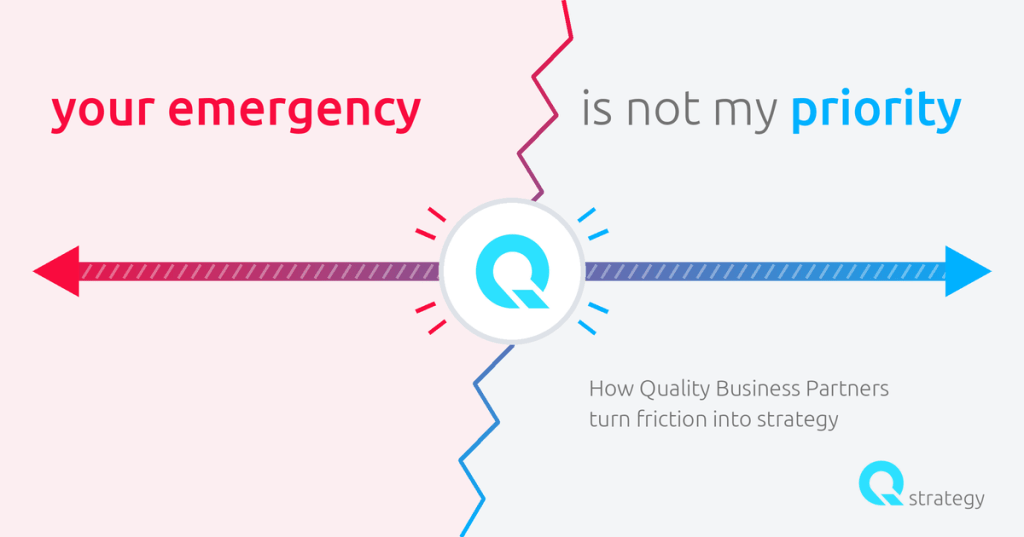
“Their Emergency Is Not My Priority”
A former colleague once shared the motto she works by: their emergency is not my priority. She was referring to colleagues from different departments coming to her with requests that needed resolution ‘yesterday’. They needed attention because they had failed to plan, action, or prepare in a timely manner.
When I first heard it, it sounded almost harsh. The more I thought about it, the more powerful it became. It isn’t about ignoring other people’s problems. It’s about recognising that urgency and priority are not the same thing.
A QC failure can be a genuine emergency for the production line. It deserves a fast response: contain the affected product, protect the customer and understand the scope. But that doesn’t automatically make it a priority for everyone to stop the entire system. A business partner can hold both truths at once, taking the emergency seriously while keeping the wider system in view.
That’s also where friction usually lives. Not in the decision itself, but in how the decision lands with the people who feel the emergency most.
Where Leadership Styles Come In
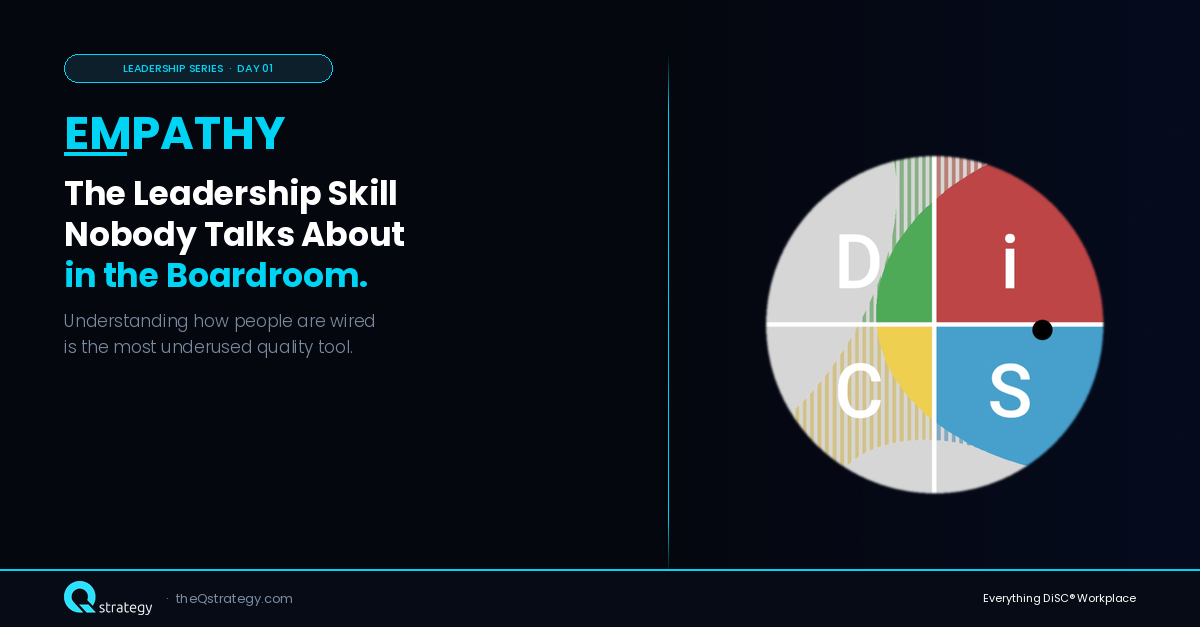
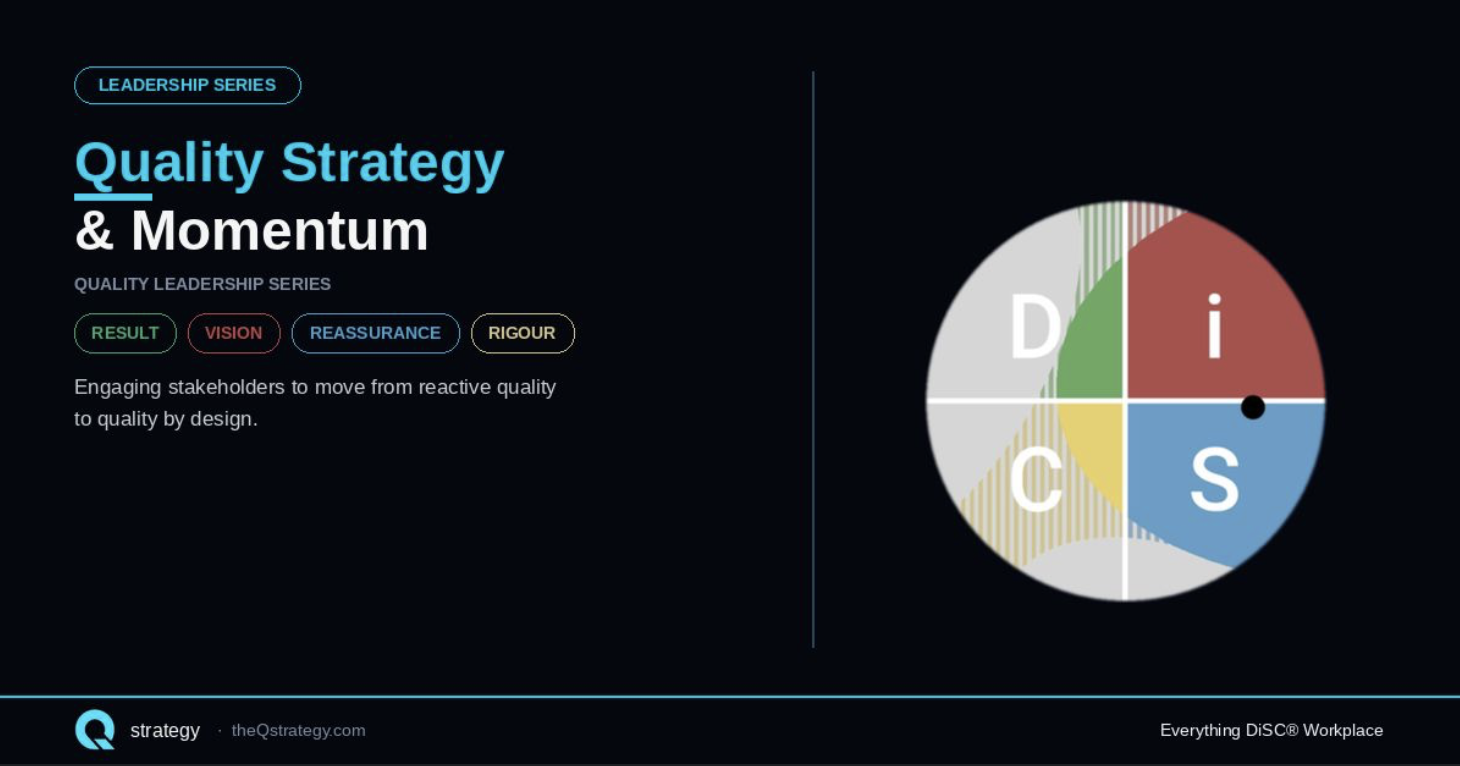
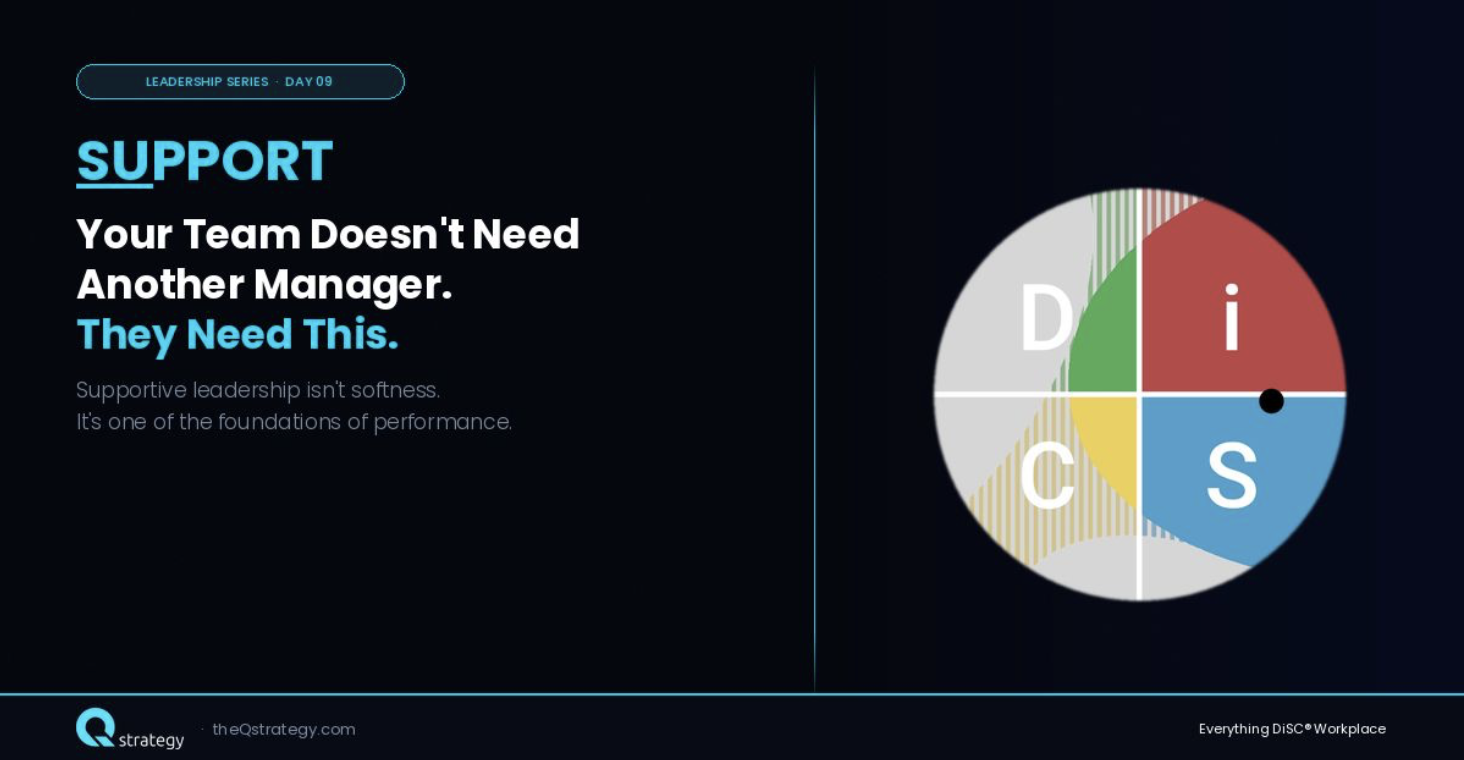
This is why I keep coming back to Everything DiSC®. When you understand the styles of the people you’re working with, you can shape how you communicate a decision so it removes friction instead of creating it.
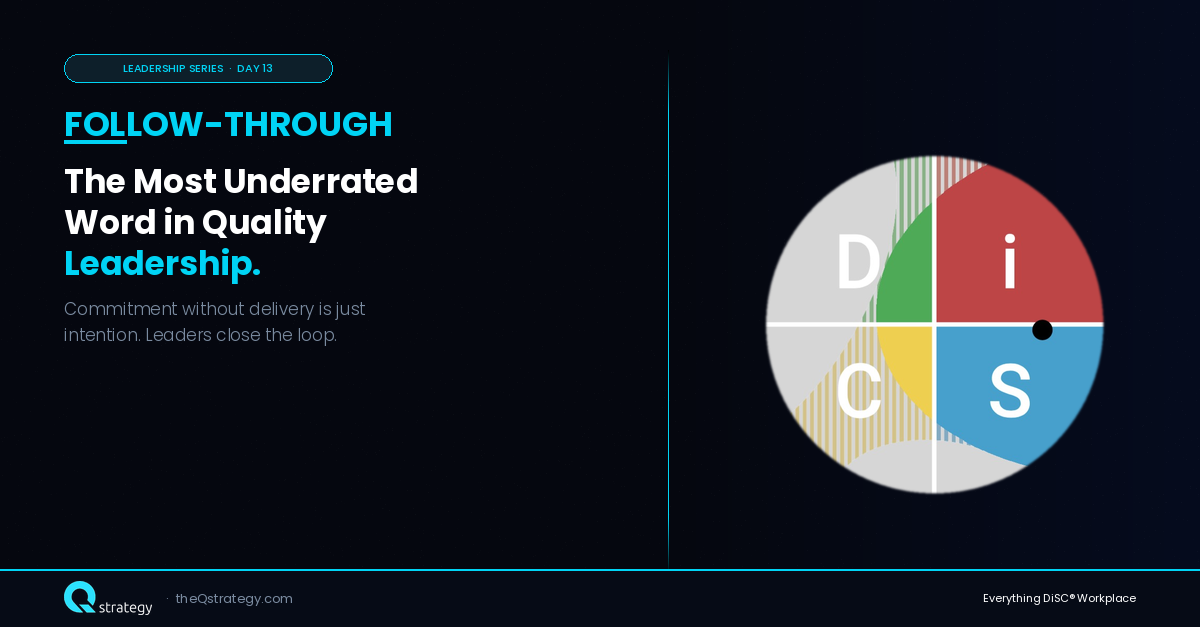
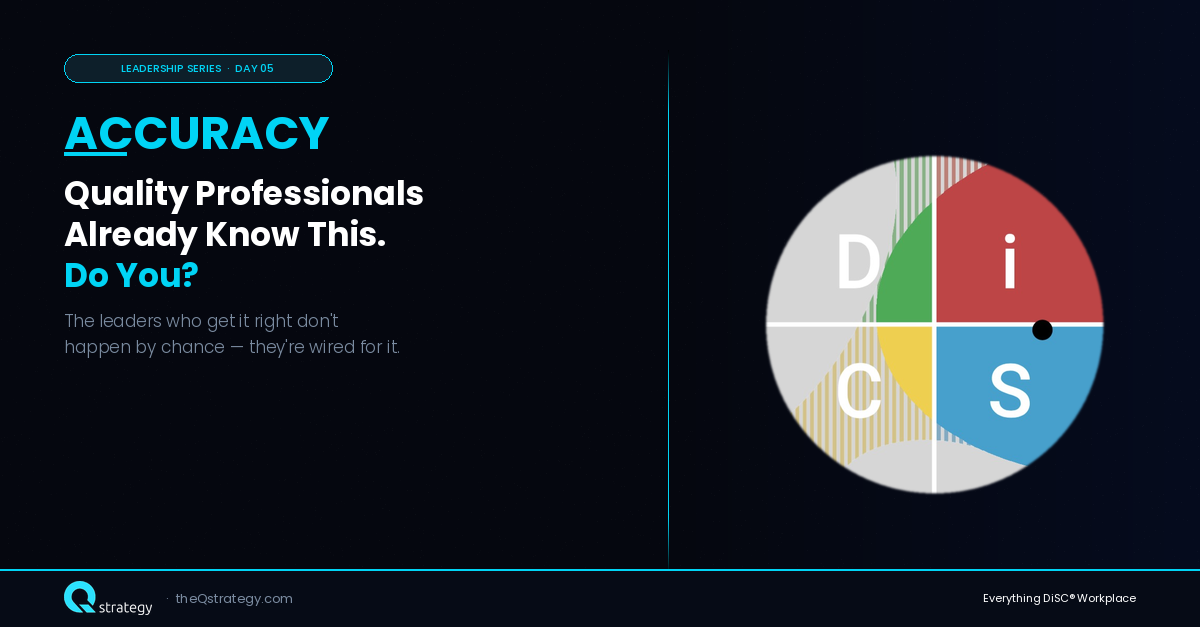
Everything DiSC® describes four basic styles. Everyone is a blend of all four, but most of us lean towards one or two:
- People focus on results and action. They want the bottom line: what happened, what we’re doing and when it will be resolved. Bring them options and a clear recommendation.
- People focus on enthusiasm and collaboration. They want to feel involved and heard. Bring them into the conversation early and frame the plan around what the team will achieve together.
- Those who focus on support and stability. They want reassurance that the change is manageable and that people are looked after. Give them a clear plan, realistic timelines and time to adjust.
- Those who focus on accuracy and challenge. They want the evidence and the logic. Show them the data, the risk assessment and how you reached your conclusion.
Imagine explaining that you won’t be stopping the whole system for a single QC failure. The production manager wants to know the containment is done and output is protected. The line supervisor wants to know their team isn’t being blamed. The QA engineer wants to see the risk assessment. The customer lead wants to know how to tell the story to the customer. The decision doesn’t change, but the conversation does.
Want to learn to read and flex across all four styles?
My Everything DiSC® leadership cohort starts on 29 October. 1 day, online, limited seats. You’ll discover your own style, learn to recognise others’, and practise adapting how you lead so friction turns into progress.
From Friction to Strategy
PMI shows that project and product managers can turn their push and pull into a partnership through early alignment, clear roles, a shared language and joint ownership of outcomes. Quality leaders do the same.
A Quality Business Partner doesn’t make the tension disappear. They make it useful. They use risk-based thinking to decide what matters now and what belongs in the improvement strategy. And they use their understanding of people to bring each stakeholder along in a way that works for them.
Their emergency may not be your priority. But when you handle it well, it will never feel like you didn’t care.
How do you handle competing priorities in your quality team? Do you have a motto, like my former colleague’s, that helps you hold the line? Drop it in the comments. I’d love to build a collection.
If you’d like to follow this series on quality leadership and business partnering, hit follow or subscribe so it lands in your feed.
Check out Everything DiSC® framework and the Leadership Cohorts I run on my page or get in touch for an informal coffee chat!
You can access the Dual Engine Report directly from PMI’s website.