
Collaborations Have to Mean Something
Collaborations have to be strategic and meaningful. Otherwise they’re just two logos sitting side by side.
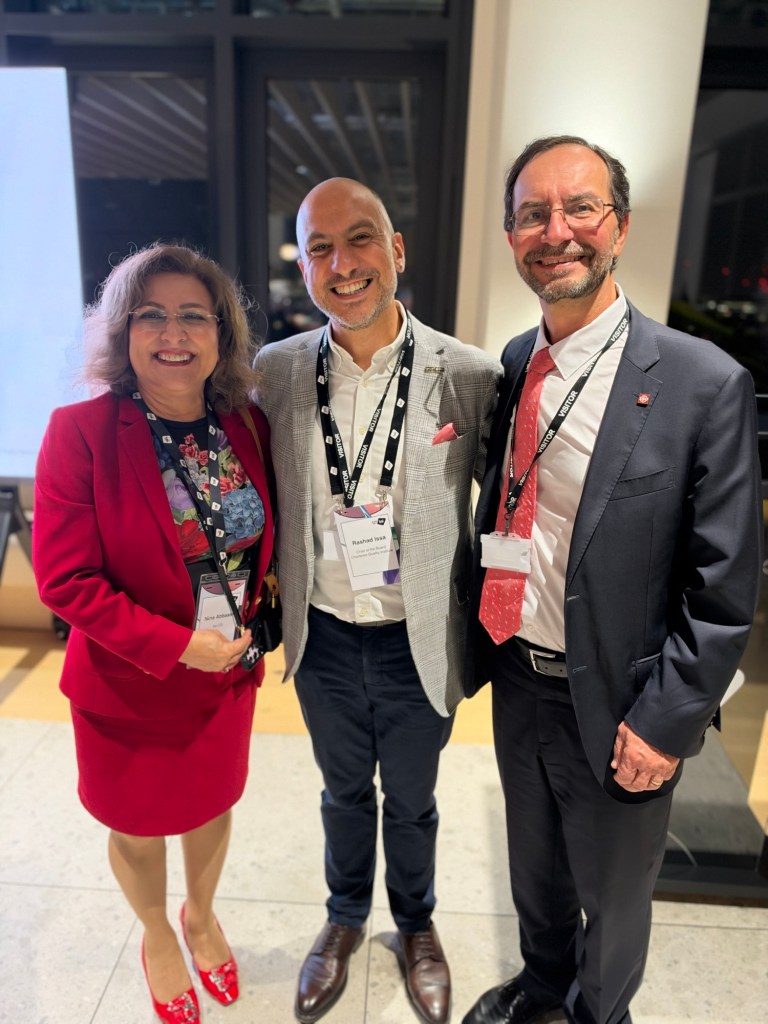
So I’m proud to share that I am collaborating with Nina Abbassi and Laura White at Abbassi Ltd to do something I care deeply about: empowering auditors in their careers. Together, we’re delivering the CQI and IRCA Certified ISO 9001:2026 Lead Auditor (QMS) course.
Why this collab, and why now? Because this new standard talks about culture. For the first time, quality culture is an explicit leadership requirement in ISO 9001. I’m a strong believer that a good quality culture is what keeps an organisation well oiled. When the culture is right, improvement doesn’t have to be pushed. It happens naturally, because people want to make things better.
Auditors play a big part in that. They’re often the first to see the real culture of an organisation, and they’re in a unique position to help leadership see it too. Helping auditors build the skills and confidence to do that well is what makes this a meaningful engagement.
Helping People See Their Own System is Hard
At the end of my last post on the ISO 9001:2026 changes, I said I’d be writing about the practical side of the 2026 shift as it unfolds. And on Monday, I attended the BSI launch event for ISO9001, listening to Sergio Mujica, ISO secretary general, talk about why this version of this flagship standard matters. Now I’m happy to share what I’ve been working towards.
I’ve spent 20 years in quality, and I’ve been through enough management systems to know that the standard is rarely the hard part. The hard part is helping people see their own system clearly. That’s what a good lead auditor course does, and it’s why this one matters so much right now: every auditor and every certified organisation is about to meet ISO 9001:2026 for real. I want the people coming out of this course to be ready for that from day one.
Why the Auditor Matters More in This Revision
If you read my last post, you’ll know the lesson I took from the 2015 transition: the hesitance I saw in the leadership team wasn’t really about the standard. It was data. It was telling me something about how much trust existed in the QMS.
That lesson benefitted me as an auditor too. Good auditors don’t just check whether a requirement is met. They notice what the organisation is reluctant to show them, and they ask why, and without judgement.
ISO 9001:2026 makes that skill harder to fake:
- Quality culture is now an explicit leadership requirement. You can audit a procedure by reading it. You can’t audit culture that way. You have to talk to people, watch how leaders behave, and test whether what they say matches what the organisation actually does.
- Risks and opportunities are now addressed separately. An auditor has to be able to ask “show me the opportunities you’ve identified and what you did about them”, and recognise when the answer is a risk register with a new heading.
- Management has to reflect changing stakeholder needs, not just last quarter’s numbers. That means auditing whether leadership is still genuinely engaged in the loop, not just whether minutes exist.
Every one of those evolutions requires the auditor to be curious, rather than just thorough. That’s the kind of auditor I want to help develop.
Why Abbassi
I was particular about who I’d do this with. Abbassi Ltd has been working in quality since 1993, is a CQI and IRCA Approved Training Partner, and works with organisations across construction, infrastructure, defence, energy and aerospace. Their training is built around being practical and highly interactive, which matters, because you don’t learn to audit by being read a standard. You learn it by planning an audit, running interviews, writing findings and defending them.
Their approach to ISO 9001:2026 also matches mine: the revision is evolutionary, and auditors must feel empowered to have that open conversation about what they observed in their audits, because that in itself adds value to organisations.
And finally, of course, it is all about people. Working alongside Nina and Laura is driven by trust and mutual respect. An essential formula, not only for collaboration, but also for developing capability that would benefit the auditors of tomorrow.
If You’re Thinking About It
You don’t need to be certain you want to become a third-party auditor to get value from this. When I took my lead auditor course many moons ago, I wanted to understand what my own system looks like from the outside, and to have better conversations with my leadership team as a result. I wanted to learn the skills to walk in the shoes of an external auditor and help the leaders see what I see.
If you are ready to support your leadership team, or help them embark on bringing their management system to life, this is a good week to spend learning to see it the way an auditor will.
Book your place · 23–27 November 2026
The Course at a Glance
- Course: CQI and IRCA Certified ISO 9001:2026 Lead Auditor (QMS) — Abbassi course PR381
- Dates: Monday 23 – Friday 27 November 2026 (5 days)
- Format: Virtual instructor-led live online
- Group size: Limited places, so everyone gets real practice time
- Outcome: Successful completion meets the training requirement for initial certification as an IRCA QMS auditor
Who it’s for: quality professionals who want the competence to audit an ISO 9001 management system as a second- or third-party auditor, and quality leaders who want to lead their own organisation’s 2026 QMS implementation with an auditor’s eye.
What you should bring: a working knowledge of ISO 9001 requirements, the PDCA cycle and the seven quality management principles. If you’re not there yet, get in touch for a conversation. There are a few routes to build that knowledge.
And if you’d just like to talk it through first, whether it’s the right course for you or someone on your team, message me directly, or simply book a free chat from the button above.
I’ll be sharing what I learn from this cohort here afterwards. Hit follow or subscribe if you want to hear how it goes.

