
Stop the wish list: one front door for every request.
In step 1, we put everything in flight into one view. For many leadership teams, that view is a wake-up call. It shows how much is going on, and how little of it anyone formally decided to start.
The next question is obvious: how did all this work get here in the first place?
Picture the head of operations in a busy, growing business. Before lunch, she’s been asked for a new client report by sales, a process fix by finance, and “a quick look” at a supplier issue by the CEO’s office. One request came by email, one in a corridor, one in a Teams/Slack message. All three are reasonable. None of them is written down anywhere the rest of the business can see.
A few months later, the sales request is still waiting, the process fix is still in progress. Not because anyone said no, but because nobody ever said yes. That’s how the performance gap widens: one unrecorded request at a time.
This is step 2 of 10 in The Performance Gap series. Grab your coffee ☕ and hopefully(?!) enjoy!
How the gap forms
When there’s no front door, work comes in through every window. A few patterns follow:
- Priority goes to the loudest voice, or to whoever happens to catch the right person at the right moment.
- The same request waits weeks or months, depending on who was asked and how busy they were.
- Requests arrive half-formed. Time disappears into back-and-forth, chasing basic details before anyone can judge whether the work is worth doing.
- Nobody can see total demand, so nobody can say honestly what the team has capacity for.
The result is a team that’s always busy, and a CEO who still can’t see whether the right work is getting done. Or worse, the business drifts into endless meetings about the work instead of doing it.
The method: Needs Assessment
Step 2 of PMI’s Value-Generating PMO Flywheel is Needs Assessment. PMI describes its purpose as “to thoroughly identify, understand, and document the explicit and implicit needs, challenges, and goals of PMO customers” (PMI, 2025, p. 153).
The important words there are explicit and implicit. The explicit needs are the requests people actually make. The implicit ones are what those requests have in common: the same bottleneck showing up in three departments, or the same report being rebuilt every month by hand.
You can’t see the implicit needs until the explicit ones are captured in one place, in the same shape.
The move: one front door
The practical answer is a single intake: one front door for every request that isn’t business as usual. It should do three things:
- Capture the same information every time: what’s needed, why, by when, and who’s asking.
- Assess priority on the day the request arrives, not months later, against agreed criteria rather than volume.
- Make total demand visible, so leadership can see the pattern behind the requests.
A front door also changes behaviour. When people know there’s one place to ask, and that their request will be seen and assessed, the corridor requests don’t stop, but they change. They happen before or after a request is submitted, and they add context instead of replacing the request.
The Asana feature: Forms & Asana AI
In Asana, that front door is a Form. Each form is attached to a project, and every submission becomes a task in that project, with the answers already filled in. Forms can ask different follow-up questions depending on earlier answers, and the people submitting don’t need to be regular Asana users. I always attach the form to a single project, usually called the intake or service request project, so every request that needs reviewing lands in one place.
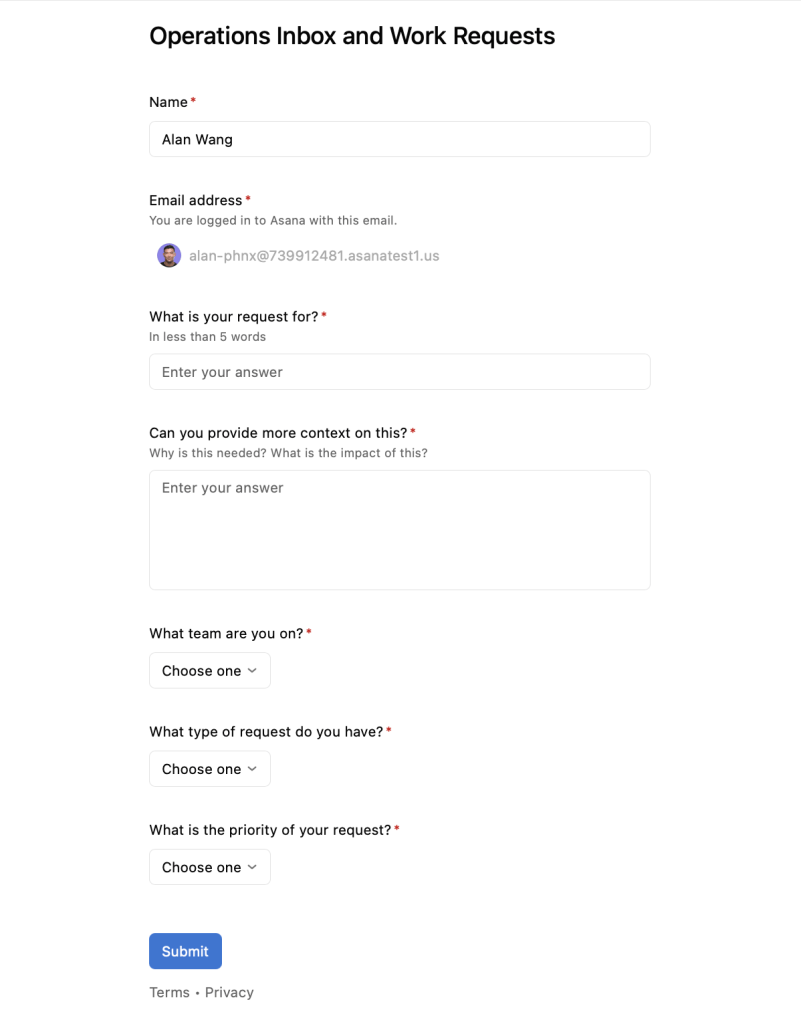
Figure 1.0: One front door for every request
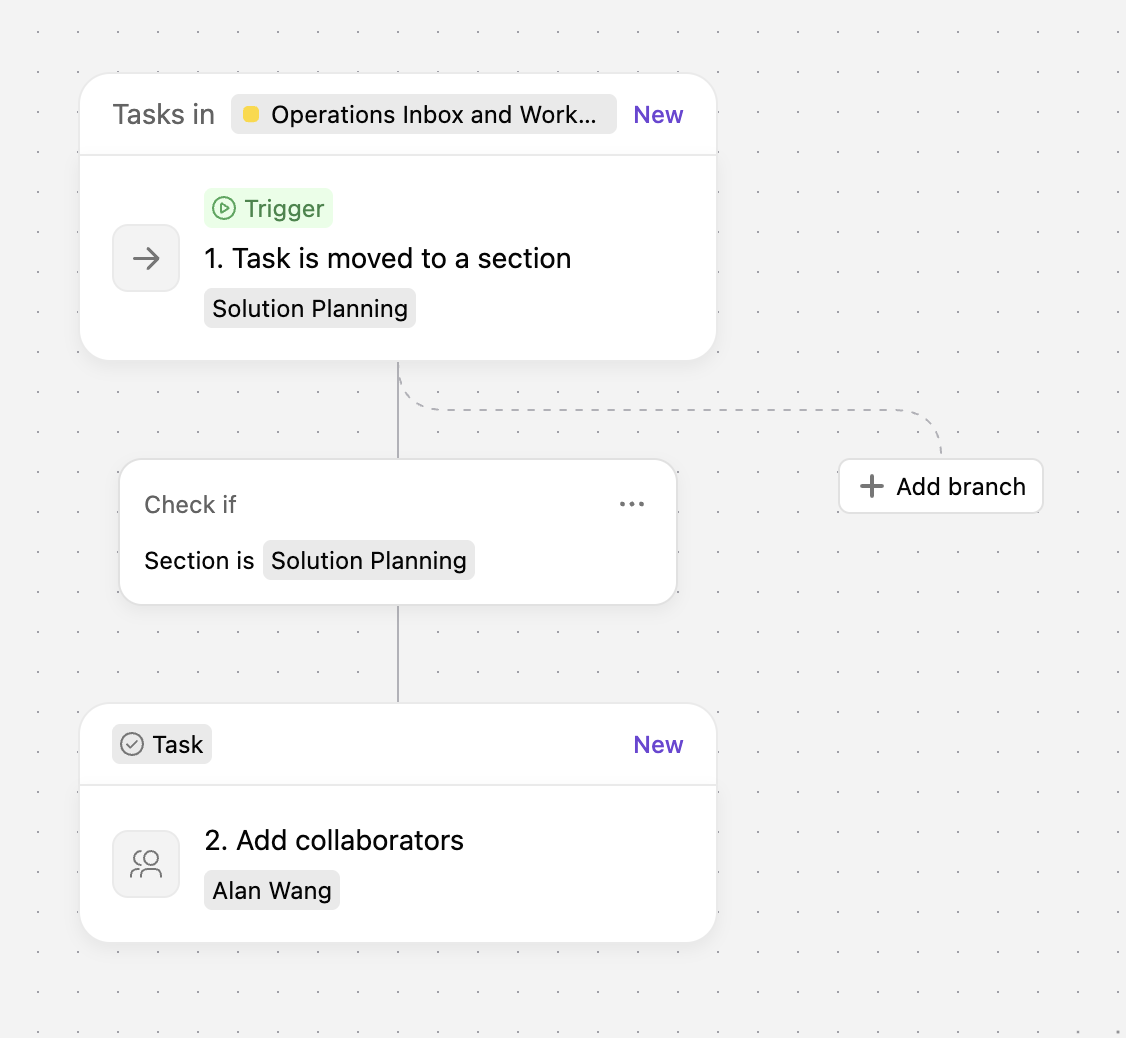
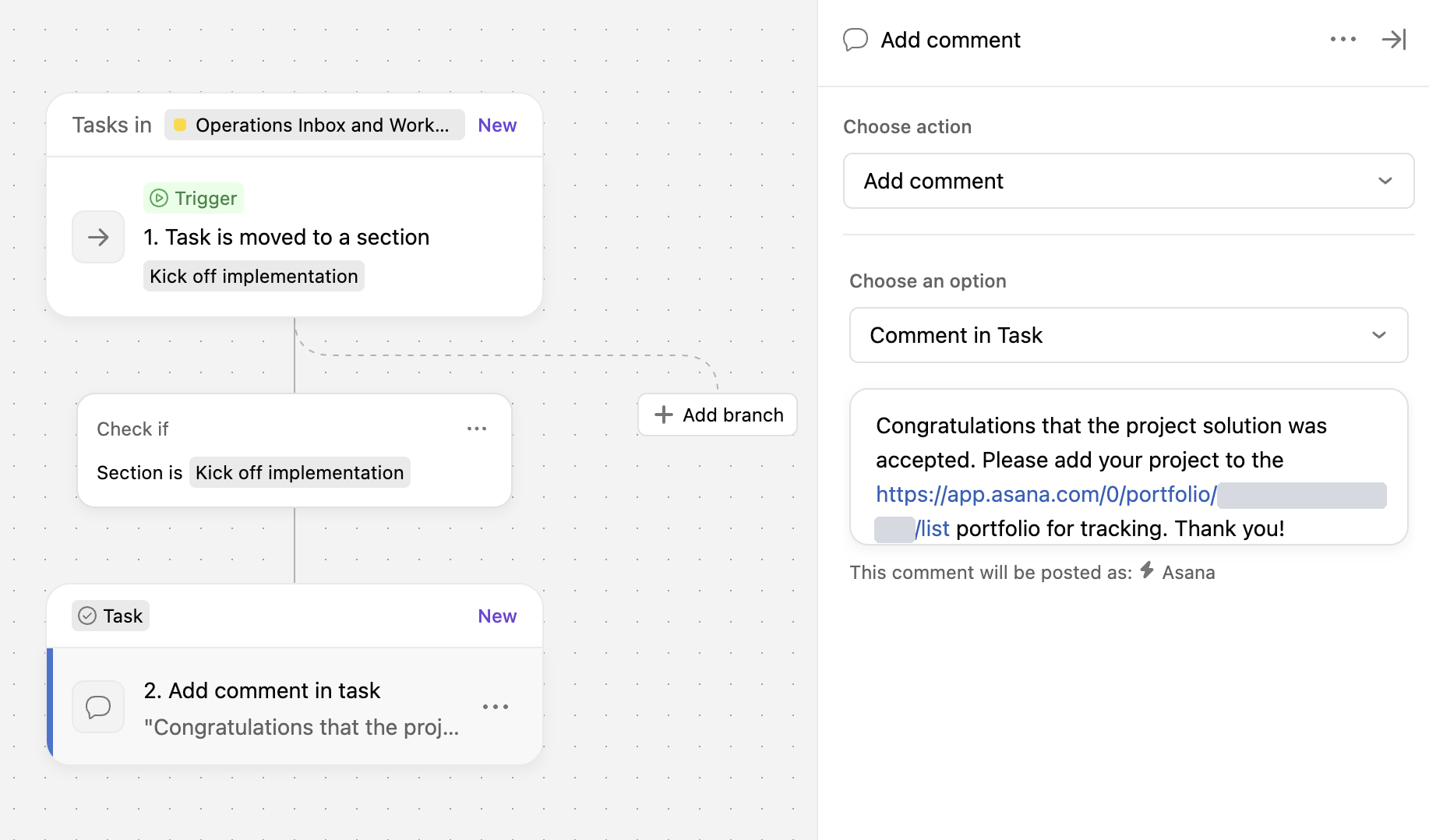
Figure 2.0: What happens next. Rules bring in the right people and tell the requester what to do.
Because every answer lands in the same fields, the intake project becomes a live record of demand. You can sort by priority, group by department, and see at a glance which teams are asking for what.
💡 Ask only what you need to triage. Every extra question lowers the chance someone fills the form in. Need, reason, deadline and requester are usually enough; the detail can come later. The way you classify your work is your internal process. Keep classification questions to a minimum; the detailed categorising is your internal job, not your customers’ (internal colleagues).
💡 Let AI chase the missing details, but keep priority human. One AI Studio rule I rely on checks each new request for missing information and comments back to the requester with up to three questions. It saves days of back-and-forth. The decision on priority stays with people.
💡 Close the side doors gently. When someone makes a request in a corridor, thank them. Depending on the culture, you might fill in the form for them the first couple of times, then point them to the link. Within a few weeks, it becomes the norm. The key thing to remember is not the form itself, but the process of capturing everything in a single place to get visibility.
Three questions for CEOs
Before the next post, try answering these honestly:
- If someone in your business needs help from another team, how do they ask today?
- How long does it take before a request gets a clear yes or no?
- Who decides priority, and on what basis?
If the honest answer is “it depends”, that’s where the performance gap is hiding.
Coming up next
In step 3, Value Proposition, we’ll look at who decides priority, and how a weekly rhythm with the CEO turns a list of requests into a clear promise. We’ll also see how Asana Goals connect the work to what the business is trying to achieve.
I hope you enjoyed your coffee. If your strategy keeps stalling between the boardroom and the work, let’s talk. No pitch, just a conversation.
Resources
- Project Management Offices: A Practice Guide (PMI, 2025)
- Asana Help Center: Forms
- Asana Help Center: AI Studio, connect your smart workflow
- Previous post: The Performance Gap Series: Awareness Building

